Wallpapering across Kent: why paper choice and wall prep matter more than you'd think
Professional wallpapering across Kent. We explain what makes hanging go right, what makes it fail, and how to get a finish worth keeping.
Why wallpapering is harder than it looks (and why that matters)
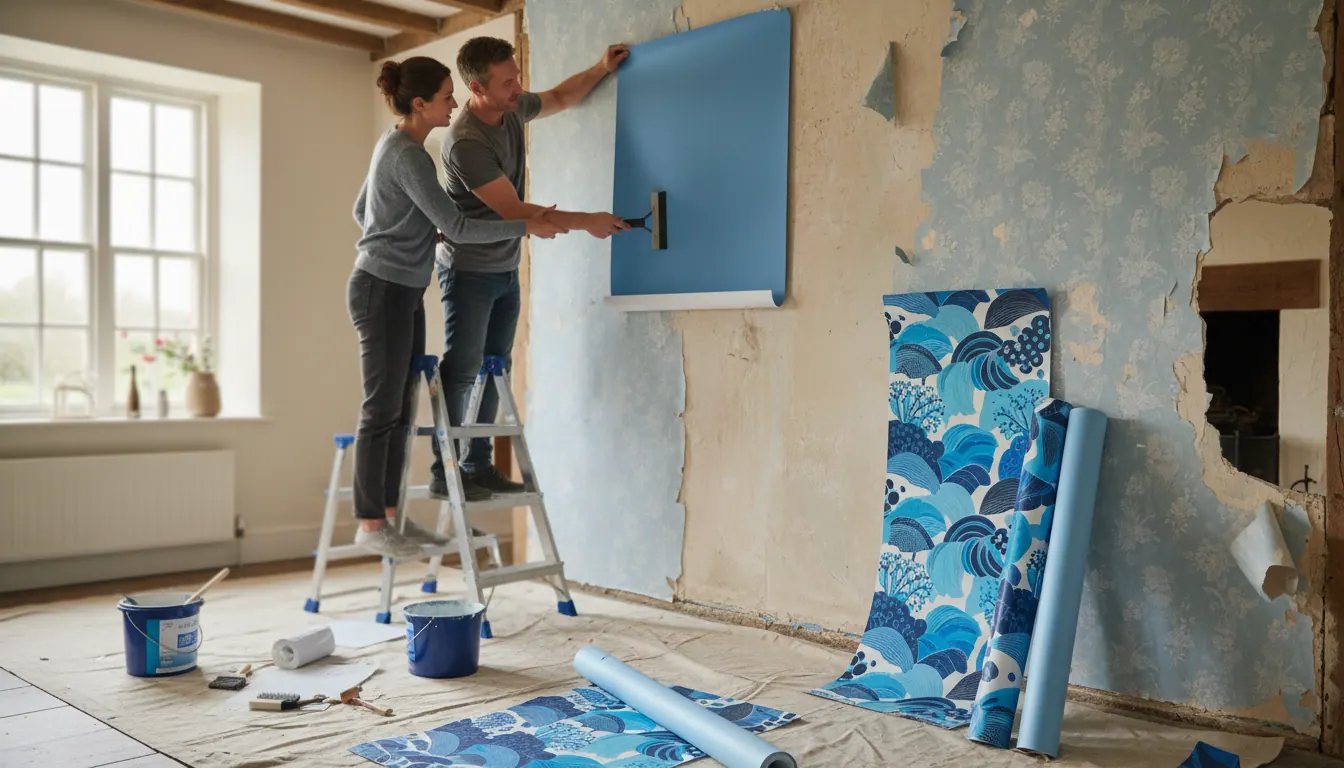
A roll of paper, a bucket of paste, a brush. On the surface, hanging wallpaper looks straightforward. In practice, it is one of the most unforgiving jobs in decorating. A wall that is not truly flat, a paste that is not right for the paper, a pattern that is not centred properly: any one of these will show. And once paper is up and dried, the problems do not hide.
We have hung paper in all kinds of homes across Kent, from Victorian terraces with walls that have not seen a plumb line in a century, to new-build rooms that look flat until the light catches them. The job demands patience, the right preparation and an honest eye for what the wall is telling you before you even open the first roll.
This article covers what actually goes into professional wallpapering, what to look for when choosing paper, and how to avoid the mistakes that lead to peeling edges, misaligned patterns and wasted money.
Preparation: the part most people skip
The finish starts long before the first length goes up. If the wall is not right, the paper will not be right. It is that simple.
A freshly plastered wall needs time to cure fully and should be sealed with a diluted mist coat before anything else goes on it. Old painted walls need to be clean, dry and free of any flaking or powdery patches. Lining paper is often the right choice before hanging a decorative top paper, especially on walls with slight imperfections or previous texture. It gives a smooth, consistent surface and helps the final paper lie flat.
We also check for any underlying damp or damage before we start. If a wall has a moisture problem, that is a job for another trade first. Hanging paper over a damp wall is a waste of everyone's time and money. It will not stick properly, and the paper will lift. We would rather be honest about that upfront than paper over a problem that will come back in six months.
You can read more about why preparation is the foundation of any lasting finish in our article Why preparation beats paint: the difference between a finish that lasts and one that fails.
Where to start when hanging wallpaper
One question we hear regularly is whether you should start in the middle of the wall or at a corner. The honest answer is: it depends on the room and the paper.
For a plain or textured paper with no repeat, starting from a corner and working around the room is usually the most practical approach. You establish a plumb vertical line with a spirit level and work from there. Corners in older Kent properties are rarely truly square, so that plumb line matters more than the corner itself.
For a bold pattern, especially one with a large, symmetrical repeat, starting from the centre of a focal wall often gives a better result. It means the pattern sits balanced on the most visible surface, with any cut lengths falling at the edges where they are less obvious. This is particularly true for feature walls, where the paper is the point and the pattern needs to land well.
The key in every case is that first vertical line. Everything else follows from it. Rush that and the whole room can drift.
Choosing the right paper for Kent homes
Kent has a wide variety of housing stock, and the right paper for one property is not always right for another. Period properties, in particular, come with their own considerations.
Older walls in Victorian and Edwardian homes are rarely perfectly flat. Heavy, textured papers can be forgiving here, helping to disguise minor imperfections. Lighter, more delicate papers will show every bump. If the walls are in good condition and lined properly, the choice opens up considerably, but it pays to be realistic about what the surface can support.
For rental properties and communal areas, durability matters. Vinyl-coated papers are easier to wipe down and hold up better in hallways, stairwells and rooms that see a lot of use. A landlord turning a property around between tenancies does not want to be redecorating again in eighteen months.
We are also seeing more interest in specialist papers: grasscloth, linen-effect and natural fibre papers that add real texture and warmth. These can look exceptional in the right setting, but they require careful handling. They are less forgiving of paste marks and do not like being repositioned once they are on the wall.
If you are thinking about a feature wall, it is worth reading our piece on Feature walls and paint effects: what actually works in Kent homes and rentals before you commit to a paper.
Pattern matching: where the time goes
A large pattern repeat is beautiful. It is also expensive in wasted paper and time-consuming to hang well. The repeat has to be matched across every join, which means each length is cut longer than you might expect. In a room with multiple drops, that waste adds up.
This is not a reason to avoid patterned paper. It is a reason to choose it deliberately and to have someone hang it who knows what they are doing. A poorly matched pattern join is visible from across the room. A well-matched one disappears.
We always recommend buying a little more paper than the room technically requires. Rooms are rarely perfectly regular, and having an extra roll or two means mistakes during hanging, or a damaged section later, do not become a crisis.
What our customers say
We work for all kinds of people across Kent. Some are moving into a new home and want it done before the furniture arrives. Some are landlords refreshing a rental. Some are homeowners who have lived with magnolia for too long and want something worth looking at.
One thing we consistently hear is that the way we work matters as much as the result. Jazmyn, one of our customers, put it this way:
bill came and done a job for my grandad who is very particular with how things are done being once in the trade himself but too old to do it himself now. bill was very kind and polite towards my grandad and would definitely use him again thanks bill brilliant job done
Working in someone's home calls for respect. That means turning up when we say we will, keeping the space tidy, explaining what we are doing and why, and leaving the room in better shape than we found it. Not everyone who hires a decorator is indifferent to how the job is done. Some people care very much. We think that is entirely reasonable.
Wallpapering in period properties across Kent
Many homes across Kent have original cornicing, picture rails and dado rails that a good wallpaper scheme can work with beautifully. Hanging paper to the picture rail rather than the ceiling, or using a contrasting paper below the dado, are approaches that suit the proportions of Victorian and Edwardian rooms well.
These decisions are worth thinking through before the paper goes up. Once it is on the wall, changing your mind is a significant job. We are always happy to talk through options before a project starts, whether that is discussing where to hang a feature paper, how to handle an awkward chimney breast or alcove, or whether lining the walls first makes sense for a particular room.
Frequently asked questions about wallpapering in Kent
Do professionals charge to hang wallpaper differently from painting? Wallpapering is generally more time-intensive than painting the same area, because of the preparation involved, the need to match patterns and the care required around switches, sockets and architraves. We provide free, no-obligation quotes so you know exactly what is involved before any work begins. We do not quote over the phone for wallpapering jobs: every room is different, and we prefer to see the space first.
Should wallpaper always be hung from the middle of the wall? Not always. For plain papers, starting from a corner with a true plumb vertical is usually the right approach. For bold, symmetrical patterns on a feature wall, starting from the centre gives a more balanced result. The most important thing in either case is establishing an accurate vertical line before the first length goes up.
How do I know if my walls need lining before wallpapering? If the existing surface is uneven, has been painted many times over, or has any texture or imperfections, lining paper will give a better result. On freshly plastered walls, a mist coat followed by lining paper is the standard approach. We assess the walls when we quote and will tell you honestly whether lining is needed.
Can wallpaper be hung in older Kent properties with uneven walls? Yes, with the right preparation. Older properties with walls that have settled and shifted over decades are common across Kent. The approach is to address any significant imperfections before hanging, use lining paper where it helps, and choose a paper weight that suits the surface. We have hung paper in plenty of period homes and know what to look out for.
Ready to talk about wallpapering?
If you are thinking about wallpapering a room or a whole property across Kent, we are happy to come and take a look. We will talk you through the options, give you an honest view of what the walls need and provide a free quote with no obligation.
Get in touch with us and we will take it from there.