Damp walls and old plaster: what a decorator needs to know before you start painting
Damp walls need more than a coat of paint. Here's what Kent homeowners should know about preparation, timing and getting a finish that actually lasts.

Why painting over a damp wall never ends well
A damp wall is one of those problems that looks fixable with paint. It is not. Paint applied over moisture will blister, peel or stain within months, sometimes weeks, and you will be back to square one with a worse surface than you started with. We see it regularly across Kent, particularly in older properties where the housing stock is full of character but also full of quirks that newer builds simply do not have.
Getting this right is almost entirely about preparation. The paint itself matters, but it is the last five per cent of the job. The ninety-five per cent that decides whether a finish lasts is everything that happens before the brush touches the wall.
Understanding why Kent homes are particularly prone to damp walls
Kent's weather does not help. The county sits in a part of England that catches a fair amount of driving rain, and properties on exposed or coastal elevations feel that more than most. Weatherboard and render both take a battering through the autumn and winter months, and if the exterior coating has started to fail, moisture finds its way in.
But the bigger factor is the age and construction of the housing. A large proportion of homes across Kent are Victorian or Edwardian terraces built with solid walls, no cavity, and lime-based mortars and plasters that were designed to breathe rather than seal. When those walls are later treated with modern, impermeable materials, moisture that would once have evaporated gets trapped instead. That trapped moisture has to go somewhere, and it usually goes into the decorative finish.
Add in the deep skirtings, moulded architrave and original doors that are so common in Kent period properties, and you have a situation where moisture can sit behind woodwork for years without anyone noticing until the paint starts to lift.
The three types of damp and why they matter before you decorate
Not all damp is the same, and the treatment before decorating depends entirely on which type you are dealing with.
Rising damp comes up from the ground through the wall. It tends to produce a tide mark at low level, often with salts crystallising on the surface. This is a structural issue and needs to be assessed and treated by a damp specialist before any decorating takes place. We can prepare and paint the wall once the source has been addressed, but painting over it beforehand would be a waste of everyone's time and money.
Penetrating damp comes in through the exterior, usually because of failed render, cracked masonry, blocked guttering or defective pointing. Again, the source needs to be fixed first. Once it is, the affected area needs to dry out properly before we touch it. Depending on how long the moisture has been present, that drying period can take weeks or longer.
Condensation is the most common type in modern living, and in many ways the most manageable. It builds up in kitchens, bathrooms and bedrooms, particularly in homes that are well insulated but not well ventilated. The walls are not structurally wet, but the surface is regularly damp enough to cause mould growth and paint failure.
If you are not sure which type you are dealing with, it is worth getting a damp specialist to look before any decorating starts. We will always tell you honestly if a wall needs attention from another trade before we can do our part properly.
What needs to happen before we can paint a damp-affected wall
Once the source of the damp has been dealt with and the wall has dried out, preparation is everything. Here is what that typically involves.
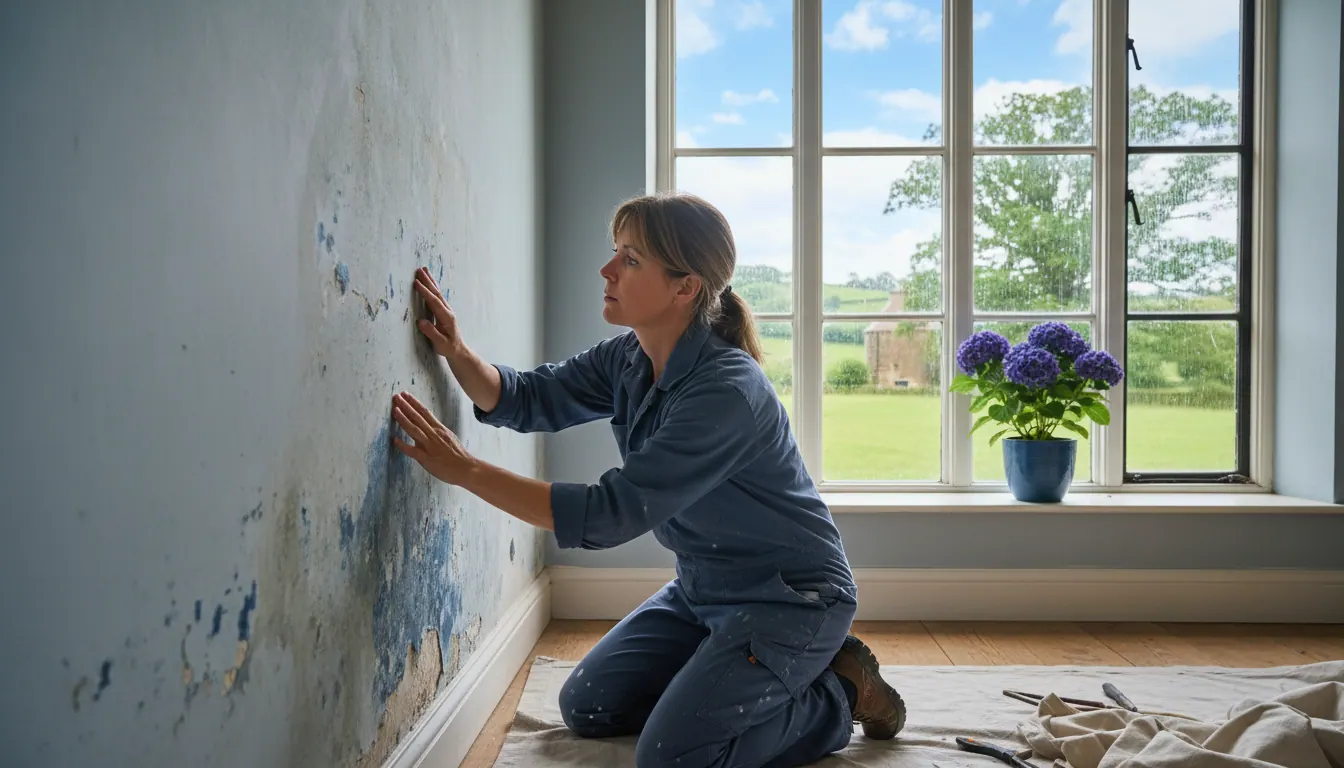
Removing affected material. Mould-damaged paint and plaster need to come off. Painting over mould, even with a mould-resistant paint, does not kill what is underneath. The surface needs to be stripped back to sound material.
Treating for mould. Any residual mould should be treated with an appropriate fungicidal wash and allowed to dry completely before any new coating goes on.
Allowing the wall to dry. This is the step that people most often want to skip, and it is the one that matters most. A wall that feels dry to the touch can still hold significant moisture content. In a Kent winter, with lower temperatures and reduced ventilation, drying times are longer than people expect. If there is any doubt, a moisture meter will give a clearer picture.
Checking and repairing the plaster. Damp often damages plaster, leaving it soft, hollow or crumbly. Hollow or failed sections need to be cut out and re-plastered by a plasterer before we can decorate. We do not plaster, and we will say so plainly. Getting that work done properly is what gives us a surface worth painting.
Priming and sealing. Once the wall is sound, dry and clean, the right primer makes a real difference. On walls that have had damp issues, a stain-blocking primer helps prevent any residual discolouration bleeding through the finish coat. On walls that have been freshly plastered, a mist coat of diluted emulsion lets the surface breathe and accept the topcoat properly.
For more on why this kind of groundwork is so important, our article on why preparation beats paint: the difference between a finish that lasts and one that fails goes into the detail.
Choosing the right paint for walls that have had damp problems
Once the wall is properly prepared and dry, the paint choice matters more than usual.
In rooms prone to condensation, a breathable emulsion allows a small amount of moisture vapour to pass through rather than trapping it behind the film. Standard vinyl emulsions can trap moisture, which is part of why they blister in bathrooms and kitchens. A specialist bathroom or kitchen formulation, or a breathable masonry-type product on solid walls, will perform better long-term.
For walls that have had penetrating damp and are now dry and sound, a good quality matt or eggshell finish applied in the right conditions gives a durable result. The key word there is conditions: the room needs to be at a reasonable temperature, with adequate ventilation, and the wall surface must be genuinely dry.
We do not name specific paint brands, but we are happy to talk through the product types that suit different situations when we come to quote.
Exterior walls: when damp problems start outside
Many of the damp issues we see on interior walls in Kent homes actually originate outside. Render that has cracked or carbonated, masonry pointing that has failed, or exterior timber that has not been maintained all allow water in. Once it is in, it migrates through the wall and appears on the interior surface.
If the exterior of the property is the root cause, that is where the solution starts. Repainting exterior render or masonry with a breathable masonry paint helps protect the surface and reduce water ingress, but only once any structural defects have been made good. Painting over cracked render seals in the problem rather than solving it.
Our article on exterior painting in spring: preparing weatherboard and masonry for Kent's weather covers the exterior side of this in more detail, including how we approach render and weatherboard on Kent homes.
What a customer noticed about getting the job done properly
The review below was left by Jazmyn Mary Alice Mansfield about the work carried out for her grandfather, who had been in the trade himself:
bill came and done a job for my grandad who is very particular with how things are done being once in the trade himself but too old to do it himself now. bill was very kind and polite towards my grandad and would definitely use him again thanks bill brilliant job done, Jazmyn Mary Alice Mansfield, via Facebook
It says something that someone who knew the trade from the inside was happy with the result. Getting things right, treating the customer with respect and leaving a job done properly: that is what we aim for on every visit.
Frequently asked questions
Can I just paint over a damp wall with a damp-seal product? Damp-seal paints are designed as a temporary barrier, not a cure. They may hold for a short time, but if the source of the moisture has not been addressed, the paint will eventually fail. The right approach is to fix the cause, let the wall dry, and then decorate. We will always be honest with you if a wall is not ready to paint.
How long does a damp wall need to dry before it can be decorated? It depends on how wet the wall is, how long it has been wet, and the conditions in the property. A wall affected by a short-term leak in a warm, ventilated room might be ready in a few weeks. A wall that has had rising or penetrating damp for years can take considerably longer. A moisture meter is the most reliable way to check, and we would rather wait and do the job once than rush and have the finish fail.
Do I need a plasterer before a painter and decorator can help? If the damp has damaged the plaster, yes. Soft, crumbly or hollow plaster needs to be cut out and re-done by a plasterer before we can decorate. We will tell you clearly if that is the case when we come to look at the job. Once the plaster is sound and dry, we can take it from there.
Does Kent's climate make damp wall problems more common here? The combination of older solid-wall housing and Kent's wet autumns and winters does mean damp is a recurring issue in the county. Properties on exposed sites, or with north-facing elevations that dry slowly, are particularly susceptible. Getting the exterior maintained and the interior prepared properly is the most reliable way to stay ahead of it.
Ready to get it sorted?
If you have a wall that has had damp problems and you want an honest assessment of what needs to happen before it can be decorated, we are happy to help. We offer free, no-obligation quotes and will always tell you plainly if another trade needs to be involved first.
Get in touch with us and we can arrange a time to come and look at the job.