Painting over old gloss: why Kent homes need stripping, not just sanding
Painting over old gloss in Kent? We explain why prep decides everything, sanding, priming and choosing the right finish for period woodwork and walls.

Why old gloss is the one surface that punishes shortcuts
Old gloss paint is slippery by design. That sheen you can see is the same thing that makes fresh paint struggle to bond with it. Skip the preparation and the new coat will look fine for a week or two, then start to flake, peel or show brush marks through the surface as the layers fail to grip each other.
Across Kent, where Victorian and Edwardian houses are common, old gloss is everywhere. Deep skirting boards, moulded architrave, panelled doors with their original profiles still intact. Some of it has had coat after coat applied over the decades, and the surface underneath can be anything from sound and smooth to crazed, chipped or soft in places. Knowing what you are dealing with before you open a tin is half the job.
This article explains what we do when we encounter old gloss, why each step matters, and what you can realistically do yourself if you are comfortable with preparation work.
The single biggest mistake: painting straight over it
It is tempting. The existing gloss looks intact, the colour is not too far from what you want, and sanding sounds like a lot of effort. But gloss paint has a non-porous, low-key surface that gives fresh paint almost nothing to grip. Emulsion applied directly will bubble or peel. Even a new coat of gloss or satin is likely to slide rather than bond properly, especially on woodwork that gets knocked, touched or cleaned regularly.
The result is a finish that chips at the edges, peels back in strips, or simply looks uneven because the new paint has cured at a different rate in different patches. More preparation time is needed to fix it than would have been needed to do it properly first time.
Does the existing gloss need to come off completely?
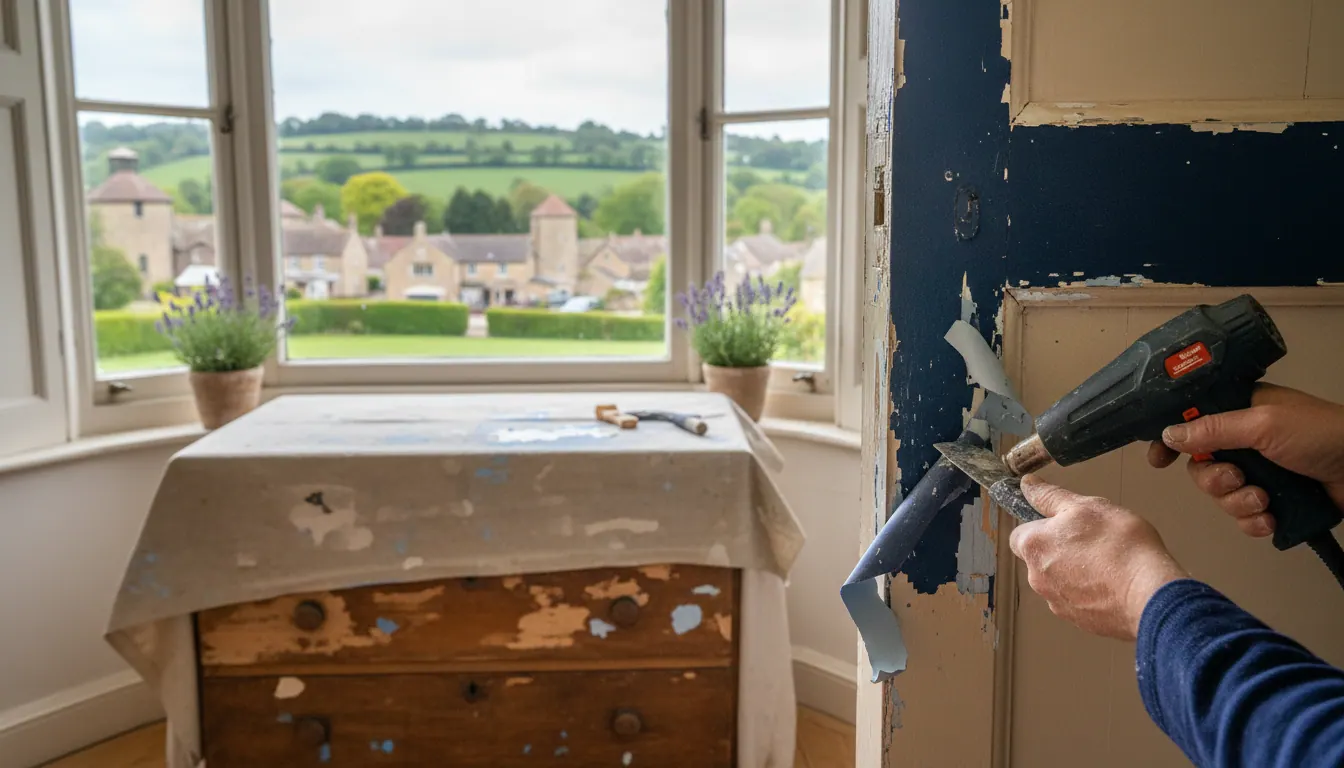
Not always. Full stripping is sometimes the right call, particularly if the surface is heavily built up, if there are multiple layers that have started to craze or crack, or if the profile of a moulding has been softened by years of paint. In those cases, a heat gun or chemical stripper, followed by careful sanding back to bare wood, gives you a clean start.
But if the existing gloss is sound, well adhered and not too thick, you do not need to strip it. You need to key it.
Keying means giving the surface a mechanical texture that the new coat can grip. Fine-grit sandpaper (typically 120 to 180 grit for woodwork) worked over the whole surface, not just the rough patches, is the standard approach. You are not trying to remove the gloss entirely. You are scuffing it enough that it is no longer slippery.
After sanding, the surface should look dull and feel slightly rough to the touch. Wipe it down thoroughly with a damp cloth or sugar soap solution to remove dust, and allow it to dry completely before you go near it with a brush.
If you are wondering whether sanding alone is enough, or whether you need a primer on top, the honest answer is: it depends on what you are painting over and what you are applying next.
Priming: when it is necessary and when you can skip it
On bare or newly keyed wood, a primer helps seal the surface, raises any grain that needs cutting back, and gives the topcoat a consistent base to sit on. On sound, well-keyed gloss, a dedicated adhesion primer is worth considering, particularly if you are switching from gloss to a water-based finish, or if the surface has had repairs.
Adhesion primers are formulated specifically for low-key surfaces. They grip where standard undercoat might not. If you are painting over old oil-based gloss with a modern water-based satin or eggshell, an adhesion primer is good insurance.
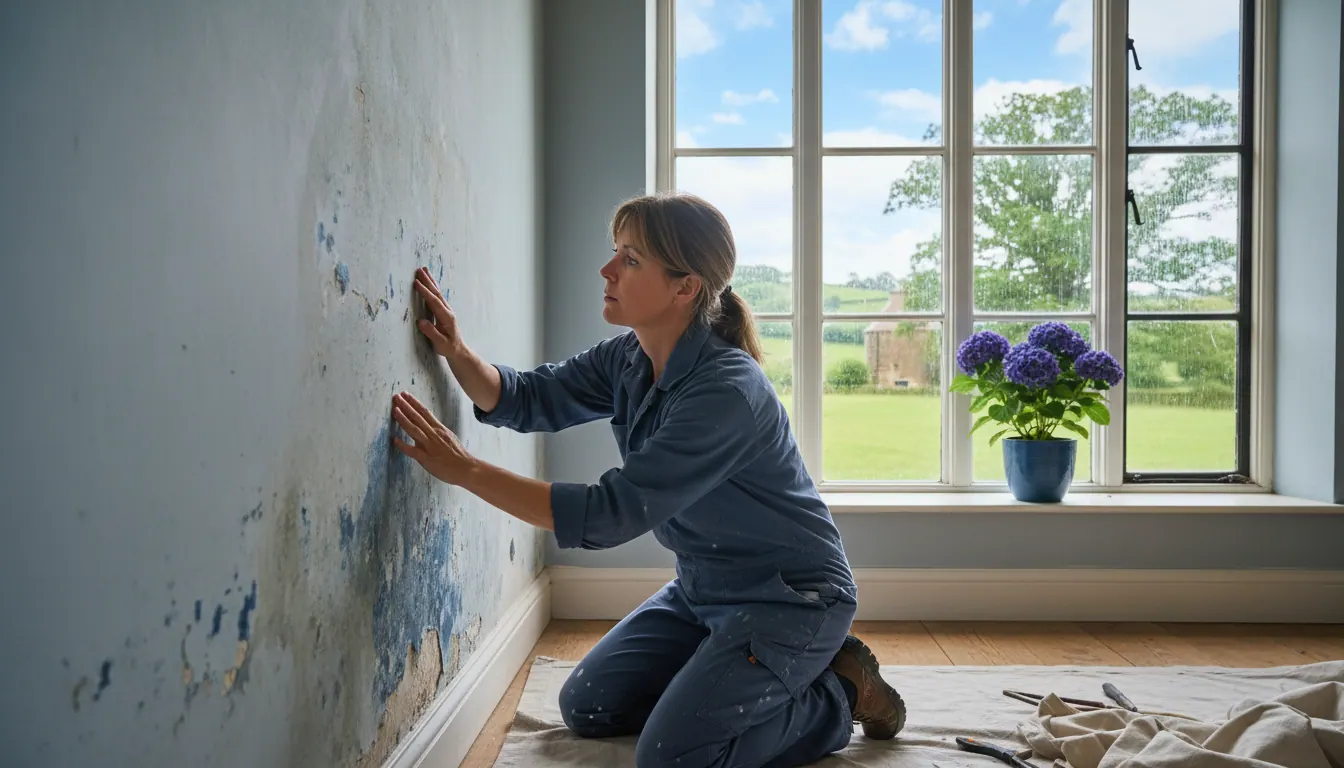
One thing to be aware of: if you are painting a wall that previously had gloss applied to it (not uncommon in older Kent properties, especially in kitchens and bathrooms), the same rules apply. Sand, clean, prime if the surface is very shiny or if you are switching to emulsion. Skipping this step is why some walls end up with an uneven, almost streaky finish that no amount of extra coats will fix.
For more on how preparation underpins everything, our article on why preparation beats paint: the difference between a finish that lasts and one that fails goes into the detail.
Choosing the right finish to paint over old gloss
Gloss over gloss. Yes, you can apply new gloss over old gloss, provided the surface has been properly keyed and cleaned. The finish will be hard and wipeable. On woodwork that takes a lot of wear, such as a front door or a staircase, gloss remains a practical choice.
Satinwood or eggshell over gloss. This is increasingly common because modern water-based satins and eggshells are easier to apply, dry faster and have less of an odour than traditional oil-based gloss. They can go over keyed gloss, but the switch from oil to water-based requires an adhesion primer in between. Without it, you risk the new coat not bonding properly, particularly on surfaces that get warm (radiator pipes, windowsills in direct sun).
Emulsion over gloss on walls. If you are painting a wall that has been glossed, emulsion will not stick without preparation. Sand the surface, apply an adhesion primer or a coat of diluted PVA, allow to dry, then apply your emulsion. Even then, expect to apply two full coats to get an even finish.
Period woodwork in Kent: why it deserves careful handling
Many Kent homes, particularly the Victorian and Edwardian terraces that make up a significant part of the county's housing stock, have original woodwork that is genuinely worth preserving. The profiles on original architrave, the panelled detail on a four-panel door, the depth of a deep skirting board: these are not things you can easily replace, and they are one of the things that give older houses their character.
Heavy-handed preparation on these surfaces can do real damage. A heat gun used carelessly near a glazed door will crack the glass. Chemical stripper left too long on soft wood will raise the grain badly. Sanding too aggressively will round off the crisp edges of a moulding.
Our approach on period woodwork is to take the time that the surface needs. Strip where stripping is genuinely necessary. Sand carefully, following the profile of the moulding. Fill any cracks or chips with a fine surface filler, allow to dry, then cut back before priming. The extra time at this stage is what separates a finish that looks professional from one that just looks painted.
If you are working on original Victorian or Edwardian woodwork, our article on painting Victorian and Edwardian woodwork in Kent: doors, architrave and skirting that last covers the specific challenges in more detail.
What a customer noticed about the detail
One review we received captures something we genuinely care about:
bill came and done a job for my grandad who is very particular with how things are done being once in the trade himself but too old to do it himself now. bill was very kind and polite towards my grandad and would definitely use him again thanks bill brilliant job done, Jazmyn Mary Alice Mansfield, via Facebook
When someone who has worked in the trade is the one watching the job, the preparation does not go unnoticed. That is the standard we work to on every job, whether it is a single door or a full house.
Could you do this yourself?
Honestly, yes, for straightforward jobs. If you have a sound surface, the time to sand it properly, and a steady hand with a brush, painting over old gloss on a wall or a simple piece of woodwork is within reach of a careful DIY approach.
Where it becomes harder is on detailed mouldings, on surfaces with a lot of previous paint build-up, or where the prep reveals underlying problems such as soft or damaged timber. Soft or rotten wood is a job for a joiner before a decorator goes near it.
The other honest answer is that preparation takes longer than most people expect. The painting itself is often the quick part. If you are short on time, or if you want a finish that will last, that is where we come in.
Frequently asked questions
Can I paint gloss over existing gloss without any preparation? Not if you want it to last. New gloss applied directly to old gloss without keying the surface is likely to peel or chip. Sand the surface with fine-grit paper, clean off the dust, and the new coat will bond properly.
Do I need to sand before painting over old gloss? Yes. Sanding is the critical step. It removes the sheen that prevents adhesion. You do not need to strip the existing paint entirely unless it is heavily built up, crazed or damaged. A thorough key with 120 to 180 grit paper, followed by a clean-down, is usually sufficient on sound surfaces.
Can I use satinwood over old gloss paint? Yes, but check whether you are switching from oil-based to water-based. If you are, use an adhesion primer between the keyed gloss and the new satinwood. It is a small extra step that makes a significant difference to how well the finish holds.
Is painting over old gloss on walls different from woodwork? The principle is the same, but walls glossed with oil-based paint can be trickier because the surface area is larger and the texture less forgiving. Sand the whole wall, not just the obvious rough patches, apply an adhesion primer, and allow it to dry fully before emulsioning. Rushing this stage is the most common reason wall finishes look uneven after repainting.
Painting over old gloss in Kent is one of those jobs where the prep genuinely decides the outcome. If you have a room, a door or a full house of woodwork that needs attention and you would rather not gamble on the finish, get in touch with us for a free, no-obligation quote. We are happy to help.