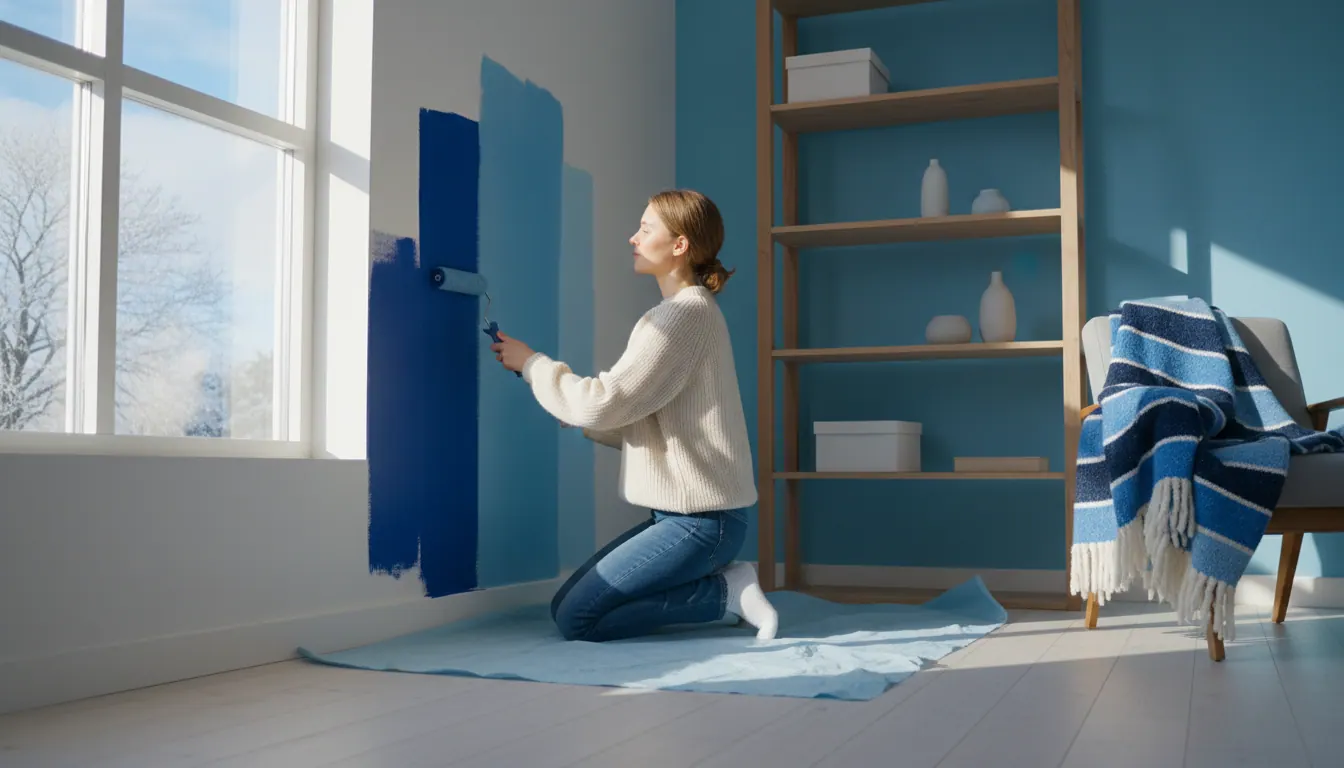
Feature walls and paint effects: what actually works in Kent homes and rentals
Thinking about a feature wall in your Kent home? We share what works, what to avoid, and how preparation makes all the difference to the final finish.


A feature wall done well changes a room. A feature wall done badly haunts it.
There is something genuinely satisfying about a feature wall that lands right. The colour sits perfectly against the trim. The paper hangs without a single seam showing. The room feels considered rather than accidental. We see it regularly across Kent, in period terraces, newer builds and everything in between, and the difference between a feature wall that works and one that disappoints almost always comes down to two things: the choice itself and the preparation behind it.
This article is for anyone thinking about a feature wall in their home, whether that is a bedroom, a living room, a kitchen or a hallway. We will walk through what actually works, what tends to go wrong, and why the surface behind the finish matters more than most people expect.
What makes a feature wall work in a Kent home?
Kent's housing stock is varied. You will find Victorian and Edwardian terraces with high ceilings and original plaster cornicing, 1930s semis with chimney breast walls that were made for a bold colour, post-war builds with lower ceilings that need a lighter touch, and modern new-builds where the walls are smooth but the proportions are sometimes tight.
Each of those settings calls for a different approach. A deep, chalky green that looks stunning on a tall chimney breast in a period living room can feel oppressive on a low flat wall in a newer property. A large geometric wallpaper pattern that works beautifully in a spacious master bedroom may overwhelm a box room.
The starting point is always the architecture, not the trend. That said, some themes do come up again and again when we talk to homeowners across Kent.
Colours we are seeing a lot of right now:
- Deep greens (forest, sage, olive) on chimney breasts and bed-head walls
- Warm terracotta and dusty pinks in bedrooms and kitchen dining areas
- Slate blues and off-blacks in living rooms where natural light is generous
- Warm whites and limewash effects where people want texture without drama
Wallpaper choices that are working well:
- Large-scale botanical prints on single bedroom walls
- Textured and grasscloth-effect papers that add depth without a bold pattern
- Geometric and tonal designs in hallways and behind staircases
- Mural-style papers used as a single-wall statement in living rooms and kitchens
None of these are rules. They are starting points. The room, the light and the existing woodwork all have a say.
Preparation is what separates a great feature wall from a disappointing one
We have written about this at length in our article on why preparation beats paint: the difference between a finish that lasts and one that fails, and everything in that piece applies here, perhaps more so.
A feature wall is, by definition, the wall everyone looks at. That means every imperfection is on show. A hairline crack that you might not notice on a magnolia wall becomes obvious under a dark paint or a plain wallpaper. A patch of uneven suction from old filler telegraphs itself through a satin finish. A slightly raised seam catches the light at every angle.
Before we put anything on a feature wall, we check:
- The surface. Is it sound, clean and dry? Any loose material, old adhesive residue or flaking paint needs to come off first.
- The fill. Cracks, holes and imperfections get filled and sanded back properly, not just skimmed over.
- The prime. New plaster, bare plaster or any patched areas need the right primer before paint or paper goes on. Skipping this is one of the most common reasons a finish fails early.
- The sizing. For wallpaper, sizing the wall first (applying a diluted paste or specialist size) controls suction and gives the paper time to be positioned accurately. On older Kent walls especially, where plaster can be porous and uneven, this step is not optional.
If a wall has a damp problem or needs re-skimming, we will say so plainly. Those are jobs for another trade, and they need to be sorted before any decorating starts. There is no point hanging a beautiful paper over a wall that is not ready for it.
Feature wall ideas for specific rooms
Bedroom feature walls in Kent homes
The wall behind the bed is the most popular choice, and for good reason. It frames the room without requiring you to commit the whole space to a bold colour or pattern. A deep colour here, even in a smaller room, tends to feel cocooning rather than claustrophobic.
For period properties with picture rails and cornicing, a colour that runs from skirting to ceiling on that one wall, stopping cleanly at the corners, can look very considered. The woodwork matters here. If the skirting and architrave are in good condition and painted cleanly, the whole thing comes together. If the woodwork is tired, chipped or yellowing, it pulls the eye for the wrong reasons. We often recommend addressing the woodwork at the same time. Our article on woodwork painting across Kent: doors, skirting and architrave done right covers exactly why that detail matters.
Kitchen feature walls
A kitchen feature wall is slightly different territory because of the conditions involved. Heat, steam and grease mean that the finish needs to be practical as well as good-looking. Flat matt emulsion, however beautiful on a bedroom wall, is not the right choice above a hob or behind a worktop. A washable mid-sheen or a properly sealed wallpaper is a better fit.
The chimney breast or the wall behind a range cooker is a natural focal point in many Kent kitchen-diners, and a bolder colour or a tiled-effect paper here can define the whole room.
Living room and hallway feature walls
Hallways are often overlooked, but they set the tone for everything else. A well-chosen wallpaper or a strong colour on the end wall of a hallway is one of the most cost-effective ways to lift a whole property. It is also the first thing guests see.
In living rooms, the chimney breast is the obvious candidate. But alcove walls, the wall behind a sofa, or even a low dado-height panel effect can all work well depending on the proportions of the room.
What our customers say
We are quietly proud of the feedback we receive, and this one says something we think matters.
bill came and done a job for my grandad who is very particular with how things are done being once in the trade himself but too old to do it himself now. bill was very kind and polite towards my grandad and would definitely use him again thanks bill brilliant job done
Jazmyn Mary Alice Mansfield, 5 stars
When someone who has worked in the trade themselves is happy with the finish, that means something. We take that standard seriously on every job, whether it is a full interior repaint or a single feature wall.
Frequently asked questions
What is the difference between a painter and a decorator?
A painter applies paint to walls, ceilings and woodwork. A decorator does that and more, including hanging wallpaper, creating paint effects, preparing surfaces and advising on finishes and colours. In practice, most professional tradespeople in this field do both, and the two terms are often used interchangeably. When you are having a feature wall done, you want someone who understands both the decorative side and the preparation behind it.
How long does a feature wall take to complete?
It depends on the wall, the finish and the preparation required. A straightforward painted feature wall in a room that is ready to go might take half a day. A wallpapered feature wall, especially with a large pattern repeat that needs careful matching, or on a wall that needs significant preparation first, could take a full day or more. We always assess the job properly before we start so there are no surprises.
Can I get a feature wall done in winter?
Yes, and in many ways interior decorating is well suited to the colder months. Rooms are already closed up, temperatures are consistent, and there is often more flexibility in the diary. We have written more about this in our article on interior painting in winter: why Kent homes are easier to decorate when it's cold. The main thing to check is that the room is reasonably warm and ventilated so that paint and paste dry at the right rate.
Do you offer free quotes for feature wall work across Kent?
Yes. We are happy to visit, look at the wall, talk through the options and give you a quote with no obligation. There is no charge for that, and no pressure to go ahead. We cover Kent and the surrounding area, so get in touch and we can arrange a convenient time.
Ready to talk about your feature wall?
If you have a room in mind and want to talk through what might work, we are happy to help. We cover Kent and the local area, and we bring the same care to a single feature wall as we do to a whole house repaint.
Get in touch with us and we can arrange a free, no-obligation quote at a time that suits you.