Woodwork painting across Kent: doors, skirting and architrave done right
Woodwork painting Kent homeowners and landlords can rely on. We explain prep, paint choice and why the finish on your doors and skirting matters.

Why woodwork painting deserves more thought than most people give it
Doors, skirting boards, architrave, stair spindles, window frames. They run through every room in the house, and most people barely notice them until the finish starts to fail. Yellowed gloss, brush marks locked under three old coats, chips along the bottom of a door. Then it becomes very noticeable indeed.
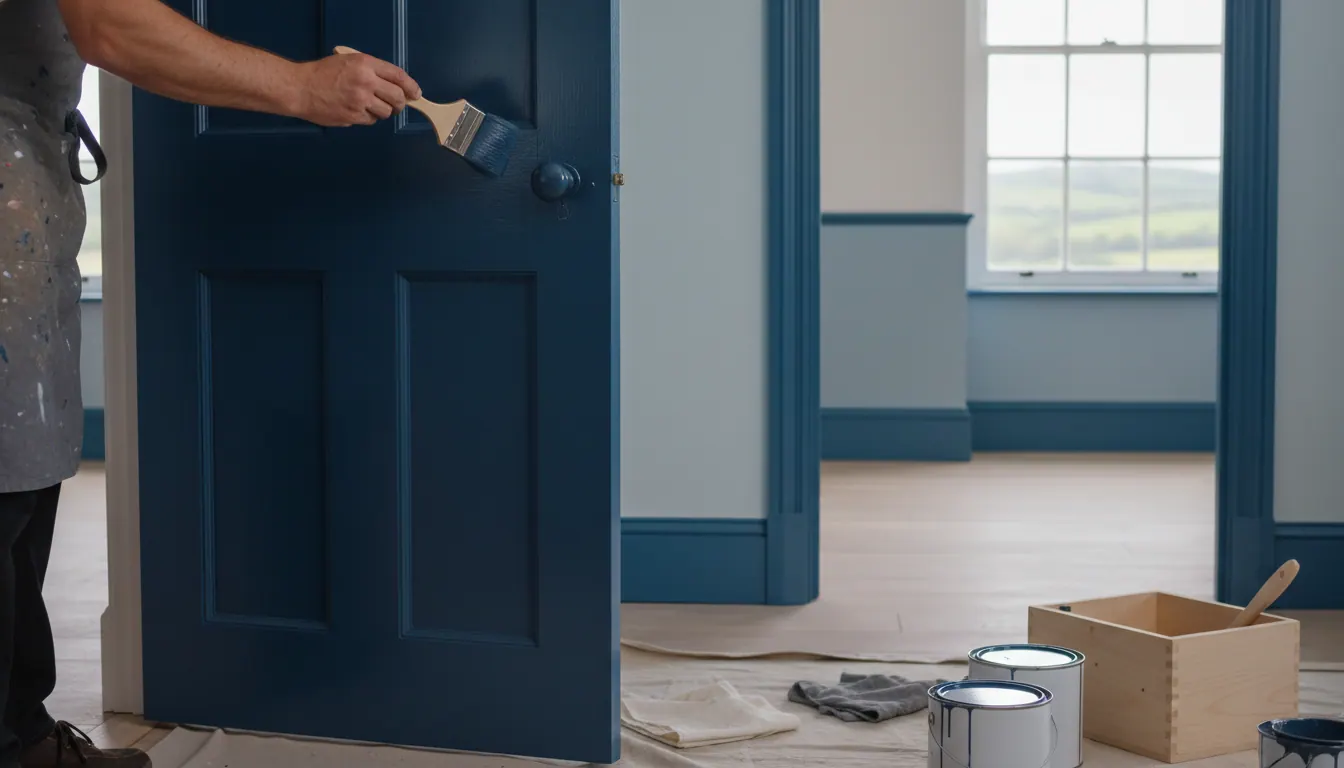
Good woodwork painting is one of those things that looks effortless when it is done right, and that is exactly the point. The clean line where skirting meets wall, the smooth run of gloss on a door panel, the way a freshly painted staircase pulls a hallway together. Getting there takes preparation, patience and the right materials. It is not complicated, but it is easy to rush, and rushing is where most finishes fall apart.
We cover woodwork painting across Kent, from period properties with original pine doors and ornate architrave to modern new-builds where the developer's gloss has already started to yellow. Whatever the starting point, the approach is the same: assess what is there, prepare it properly, and apply the right product in the right conditions.
Preparation is where the real work happens
If there is one thing that separates a finish that lasts from one that peels within a year, it is preparation. We have written about this in more detail in our piece on why preparation beats paint, but when it comes to woodwork specifically, the principles are worth spelling out.
Old gloss that is flaking or lifting needs to come back to bare wood, or at least to a sound surface. Painting over loose or powdery coatings is a waste of everyone's time. The new paint will only be as secure as whatever it is bonded to underneath.
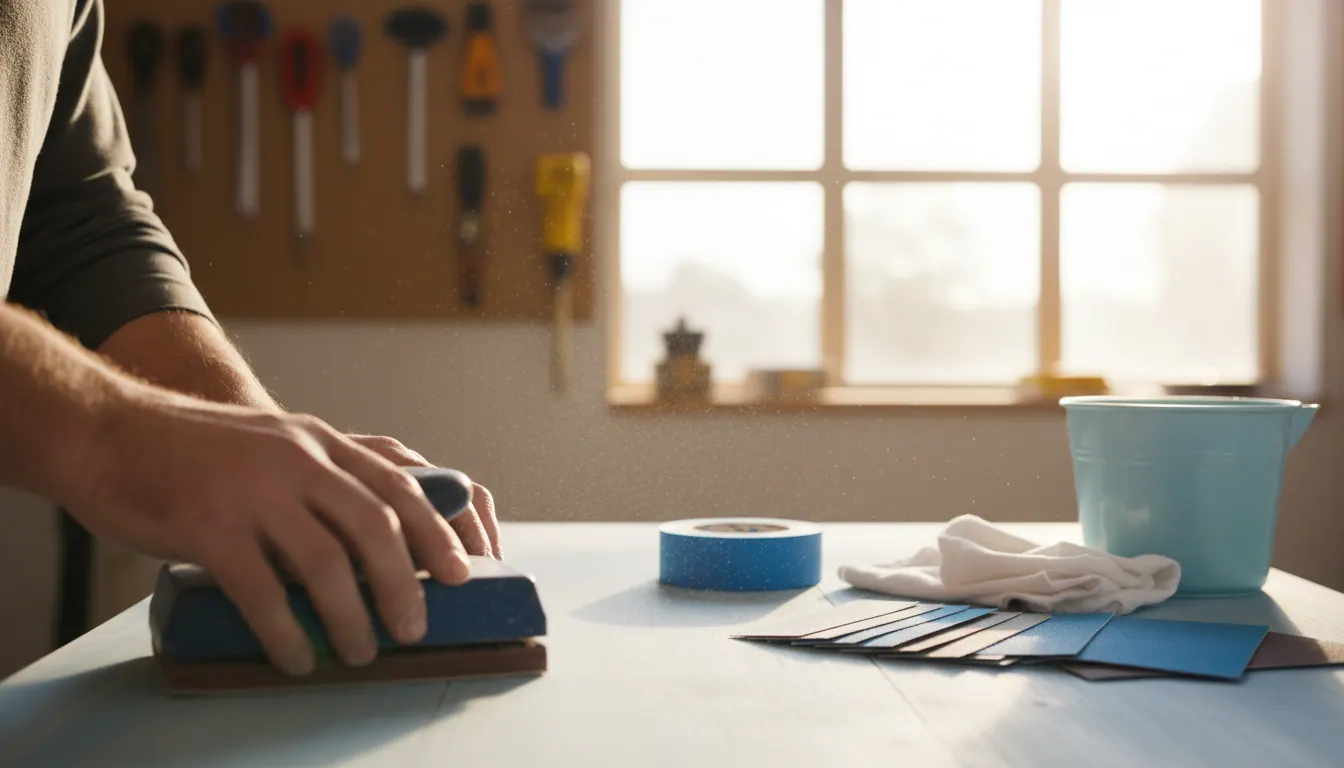
Sanding is not optional. Even sound, stable gloss needs to be flatted back to give the new coat something to grip. A light key with the right grade of paper makes the difference between a finish that adheres properly and one that chips off at the first knock. On detailed mouldings or carved architrave, this takes longer, but it is worth it.
Filling comes next. Woodwork in older Kent properties takes a beating over the years: dents from furniture, gaps where skirting has pulled away slightly from the wall, cracks around door frames where the building has moved. Every one of those needs to be filled and sanded flush before a brush goes near it.
One thing we do not do is plaster, skim or carry out any building repairs. If the wall behind the skirting is damp, or if timber is rotten, those are jobs for other trades and they need to be sorted before we decorate. Painting over a damp wall or a soft, punky section of wood is not a solution. We will always say so plainly rather than paper over it.
Choosing the right paint for woodwork
The choice of paint matters more on woodwork than on walls, because woodwork takes a great deal more wear and needs to flex slightly with seasonal movement in the timber.
Traditional oil-based gloss is still available and still has its advocates. It levels beautifully and gives a hard, durable finish. The drawbacks are drying time, the strong smell during application, and the tendency of oil-based products to yellow over time, particularly in rooms that do not get much natural light. White oil gloss in a north-facing hallway will be noticeably cream within a few years.
Water-based satinwood and eggshell products have improved enormously. The better ones are tough, flexible and stay white. They dry faster, have much less odour and are easier to clean up. For most interior woodwork across Kent homes today, a high-quality water-based product is our first choice.
The finish level is worth thinking about too. Full gloss shows every imperfection in the surface beneath it, which is why preparation matters even more when that is the chosen finish. Satin and eggshell are more forgiving and suit a wider range of settings. Period properties with original timber often look better in a softer sheen than a hard modern gloss.
What woodwork painting actually covers
When we talk about woodwork painting, we mean all of the following:
- Interior doors, including panels, mouldings and edges
- Skirting boards and dado rails
- Architrave around doors and windows
- Window frames and window boards
- Staircases, including strings, risers, newel posts and spindles
- Built-in cupboard frames and shelving surrounds
- Exterior timber: soffits, fascias, bargeboards and exposed structural timber
Staircases in particular are a job that rewards care and a clear plan. Getting the sequence right, working in a direction that keeps the staircase usable while coats dry, avoiding drips on the treads below. It is the kind of thing that sounds minor until it goes wrong.
Exterior timber needs a different approach. The paint film has to cope with rain, temperature change and UV. A flexible, exterior-grade product applied to clean, sound timber, with proper attention to end grain and any joints, will last far longer than a quick coat of whatever was left over from inside.
What our customers say
We are quietly proud of the care we take, especially on jobs where the client knows exactly what a good finish looks like. That matters.
bill came and done a job for my grandad who is very particular with how things are done being once in the trade himself but too old to do it himself now. bill was very kind and polite towards my grandad and would definitely use him again thanks bill brilliant job done
— Jazmyn Mary Alice Mansfield, via Facebook
When someone who has spent their working life in the trade watches you work, there is nowhere to hide. That review means a great deal to us.
Period properties and original woodwork
Kent has a large number of period properties, many with original timber that has been painted and repainted over decades. The woodwork in these houses is often beautiful underneath the build-up of old coatings. Getting it back to a clean, smooth finish without damaging the detail in the mouldings is a careful job.
Stripping back to bare wood is sometimes the right answer, particularly where the existing coatings have built up so thickly that detail is being lost, or where there is significant flaking and instability. It is a slow process done properly, but the result is worth it. In other cases, where the existing coatings are sound and stable, thorough preparation and a good key is enough to move forward.
If you are unsure which approach your property needs, we are happy to take a look and give you an honest assessment.
Rentals, communal areas and commercial decorating
Woodwork in rental properties takes a particular kind of punishment. Doors get kicked, skirting gets scuffed, stair spindles get grabbed. The finish needs to be durable, and it needs to be applied efficiently so a property can turn around between tenancies without a long wait.
We work regularly with landlords and letting agents across Kent on end-of-tenancy redecorating, including full woodwork refreshes. We also cover communal areas in blocks of flats and commercial premises where the standard of finish matters for how a building presents to residents, visitors or customers.
For commercial decorating Kent clients, the priority is usually minimising disruption. We are used to working around business hours, phasing work across a building and leaving each area tidy and ready to use before moving on.
Frequently asked questions
Can you paint over varnished wood without sanding it first?
Not if you want the finish to last. Varnish is a sealed, non-porous surface and new paint will not bond to it properly without a key. The right approach is to flat the varnish back with the appropriate grade of abrasive paper, clean off the dust thoroughly, and then prime if needed before applying the topcoat. Skipping this step is one of the most common reasons a painted finish peels within months.
What type of paint is best for interior woodwork?
For most interior woodwork, a high-quality water-based satinwood or eggshell gives excellent results. It stays white, dries without strong fumes, and is tough enough for daily wear. Full gloss is still a valid choice where a harder, shinier finish is wanted, but it demands near-perfect preparation because it shows every imperfection. Oil-based gloss gives a beautiful level finish but yellows over time, particularly in low-light areas.
Do you give free quotes for woodwork painting in Kent?
Yes. We are happy to visit, assess what needs doing and provide a written quote with no obligation. There is no charge for that, and no pressure to proceed.
What is the difference between painting skirting boards and painting a full staircase?
Both are woodwork painting jobs, but a staircase is more complex to sequence and access. The order of work matters: you need to keep the staircase usable while coats dry, which means working in sections and planning the job carefully. Skirting boards are more straightforward but still benefit from proper preparation, particularly in older properties where the boards have been painted many times over.
Ready to talk about your woodwork?
If your doors, skirting or timber frames need refreshing, whether that is a single room, a whole house or a rental property between tenants, we are happy to help. We cover woodwork painting across Kent and take the same care on every job, whatever the size.
Get in touch with us for a free, no-obligation quote.