Painting Victorian and Edwardian woodwork in Kent: doors, architrave and skirting that last
Period woodwork deserves careful preparation and the right paint. Here's how we approach doors, skirtings and architrave in Kent's older homes.

Why period woodwork needs a different approach
Old houses hold their character in the details. Run your hand along the skirting board in a Victorian terrace or look closely at the moulded architrave around an original door and you are looking at craftsmanship that simply does not get replicated in modern builds. Across Kent, properties like these are everywhere: solid Edwardian semis, older terraces with deep cornicing, farmhouses with panelled internal doors that have been there for over a century.
The problem is that woodwork like this tends to carry decades of paint. Sometimes many more than that. Each layer adds a little more build-up, softens the crisp edges of a moulding, and makes the next paint job slightly harder to do well. Get it wrong and you end up with a finish that chips, peels or simply looks tired within a year or two. Get it right and the woodwork looks sharp, lasts for years, and genuinely lifts the whole room.
That is what painting period woodwork in Kent is really about: not just putting colour on wood, but understanding what is underneath and preparing accordingly.
The problem with old gloss
Most period woodwork was finished in oil-based gloss, and a lot of it still is. Oil-based gloss has one significant drawback: it yellows. A door frame painted brilliant white a decade ago will often have shifted to a noticeable cream or yellow, particularly in rooms that do not get much natural light. Hallways and stairwells are the worst offenders.
The yellowing is a chemical process in the paint itself, not a sign of dirt. Washing it will not fix it. The only real solution is to repaint, and to choose the right product this time round.
Modern water-based alkyds and acrylic satins hold their whiteness far better than old oil gloss. They also dry faster, have lower odour, and are easier to clean up. For period woodwork, a satin or eggshell finish often looks better than high gloss anyway. It is slightly less reflective, which means imperfections in the surface show up less, and it suits the age of the house.
That said, the finish is only as good as the preparation underneath it.
Preparation: the part that decides everything
This is where most paint jobs either succeed or fail, and it is where we spend the most time on period properties.
Old gloss needs to be keyed properly before anything new will adhere to it. That means a thorough sand, working with the grain, until the surface has a consistent fine texture that new paint can grip. If the existing finish is flaking, blistering or peeling in places, those areas need to be taken back further, sometimes to bare wood, before being primed and built back up.
On moulded sections, this takes patience. A sanding block is not always enough. Profile sanding sponges and detail work by hand are often needed to get into the recesses of an architrave or the coves of a skirting without losing the crisp definition of the profile.
Filling is part of this too. Old woodwork often has small cracks at the joints, particularly where timber meets plaster. These open and close with the seasons as the wood moves, so a flexible decorator's filler or caulk is the right material, not a rigid filler that will crack again within months. Getting this step right means the finished paint line sits cleanly against the wall rather than showing a shadow line or a gap.
We cover all of this in more detail in our article on woodwork painting across Kent: doors, skirting and architrave done right, and the broader case for preparation is set out in why preparation beats paint: the difference between a finish that lasts and one that fails.
Original doors: worth saving, worth doing properly
Original panel doors are one of the features people most often want to restore when they move into an older Kent property. They are solid, well-proportioned, and in most cases far better made than anything you could buy as a replacement today. But they tend to arrive at the point of repainting in a fairly sorry state: thick with old paint, with the panel detail half-filled in, sometimes with patches of bare wood where previous owners have stripped sections and never finished the job.
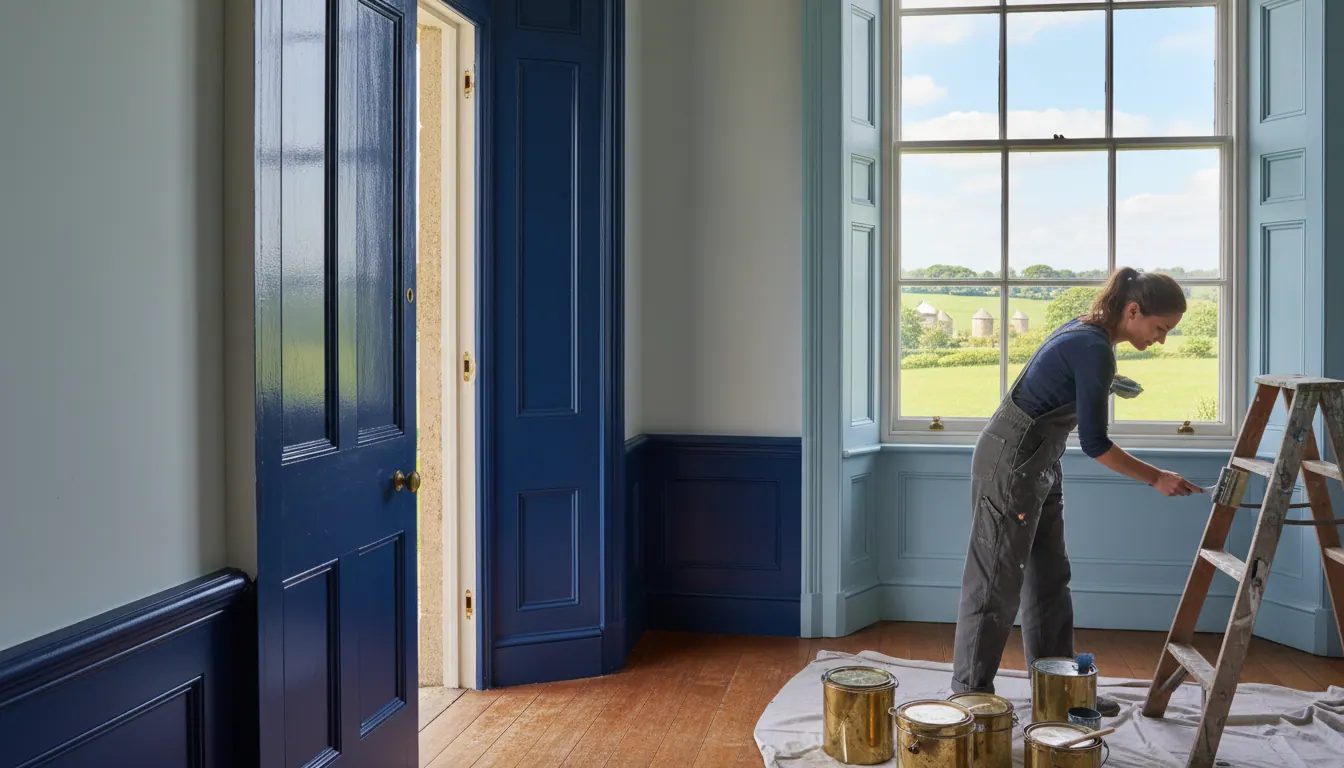
The approach we take is methodical. Each section of a panelled door is painted in a set sequence: panels first, then the muntins and rails, then the stiles, then the edges. Working in the right order means you avoid lap marks and keep the lines clean where sections meet. Brush selection matters too. A good quality brush holds more paint, releases it evenly, and leaves a finer finish than a cheap one.
Where a door is particularly heavily built up and the moulding detail has been lost, it is worth considering a chemical strip or heat gun to take it back to bare wood before starting again. That is more work, but the result is worth it. The profiles come back, the door looks like itself again, and the new paint job has a proper foundation.
Stairs and banisters: the overlooked woodwork
Staircases are often the last thing people think about when they are redecorating, and the first thing you notice when they are done. Painted spindles, a handrail, newel posts and the risers and strings all form part of the picture.
Stair spindles in particular are fiddly. There is a lot of surface area, awkward angles and small sections that are easy to miss. Done well, a freshly painted staircase transforms a hallway. Done badly, with drips on the treads or uneven coverage on the spindles, it looks worse than it did before.
We take the same preparation-first approach here: sand, fill any cracks or splits, prime bare sections, then apply the finish coats carefully. For handrails, a hard-wearing satin or eggshell holds up better than gloss under daily use.
What a good finish looks like in practice
bill came and done a job for my grandad who is very particular with how things are done being once in the trade himself but too old to do it himself now. bill was very kind and polite towards my grandad and would definitely use him again thanks bill brilliant job done
(, Jazmyn Mary Alice Mansfield, via Facebook)
That review says something we think matters. When someone who has been in the trade themselves looks at the finished job and is happy with it, that is the standard worth working to. Period woodwork in particular tends to be judged by people who know what they are looking at: homeowners who care about their house, or people who grew up around building work and know the difference between a rushed finish and a careful one.
We take that seriously. A clean finish on an original door frame or a set of deep Victorian skirtings is something to be quietly proud of.
Exterior woodwork on Kent's period homes
Painting period woodwork is not just an interior job. Older Kent properties often have original timber windows, external door frames, soffits and fascias that need the same level of care outside as in. The difference is that exterior woodwork faces the weather too, and Kent's climate is not always kind: damp autumns and mild but wet winters mean that any gap in the paint film will let moisture in, and once moisture gets into timber, the damage follows quickly.
Flexible, exterior-grade products are essential here, applied over a proper primer on clean, sound timber. Any sections that show signs of rot need to be assessed by a joiner before painting. We can paint timber, but we do not carry out structural repairs. Sorting the wood first means the paint job lasts.
For more on this, our article on soffits and fascias: why exterior woodwork needs attention before the winter weather hits covers the seasonal timing and what to look for.
Frequently asked questions
How long does painting the woodwork in a typical room take?
It depends on the condition of the existing surface and how much preparation is needed. A room with sound, previously painted woodwork in good condition can often be done in a day. A Victorian hallway with an original staircase, panelled doors and deep moulded skirtings that need stripping back and building up properly will take considerably longer. We look at the job before giving any estimate, because guessing without seeing the work leads to disappointment on both sides.
Do I need to clear the rooms before you start?
For woodwork-only jobs, it helps to have furniture moved away from the walls so we have clear access to the skirtings and architraves. We work carefully and protect floors and soft furnishings, but the more access we have from the start, the cleaner and faster the job goes.
Can you match an existing paint colour on old woodwork?
We can try to match existing colours, but old paint shifts over time through fading and yellowing, so a perfect match to aged paintwork is not always possible. Often the better option is to repaint all the woodwork in a room in a consistent new colour, so everything reads as one finish rather than a patchwork of old and new.
How do I know if the woodwork needs stripping back or just a repaint?
If the existing paint is sound, well-adhered and not too heavily built up, a key and repaint is usually the right approach. If it is flaking, blistering, heavily crazed or so thick that the moulding detail has been lost, it is worth taking it back further. We will tell you honestly what we think when we come to look at the job.
Get in touch
If you have period woodwork in a Kent home that needs attention, whether it is a single room or a whole house, we are happy to come and take a look. Quotes are free and carry no obligation. Get in touch with us and we will talk through what the job involves.